Plastics and rubber materials, with their related processing and application, contribute very significantly to the expanding manufacturing sectors of both national and regional economies. Finished plastic and rubber products have a major influence on the quality of our daily life.

The Plastics and Rubber Institute of Singapore (PRIS) is the national professional body established for members who are in those businesses related to plastics and rubber as described above. It acts as the focal point and centre for networking for members and assists in promoting the interests of its members through regular technical meetings, seminars and conferences and visits to manufacturing plants and industrial sites, etc.

The PRIS also has an important role in establishing sound ethical guidelines, through its professional grades of membership, and for maintaining high standards of education and professional competence in the science, engineering and technology of plastics and rubbers.

What's New

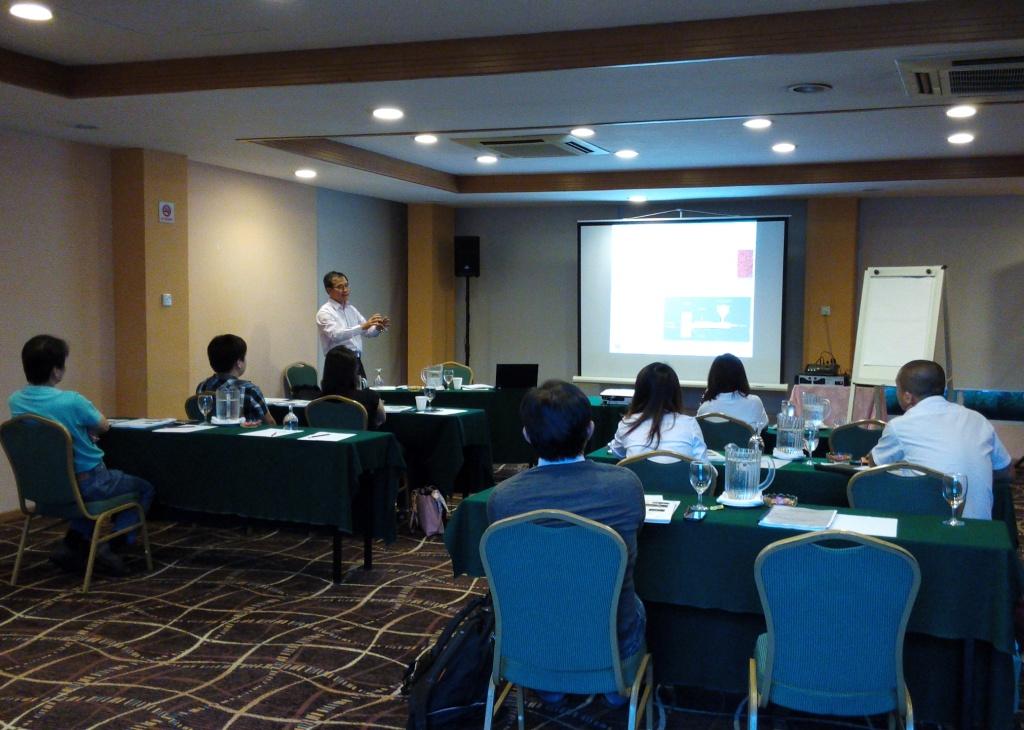
Technical Talk (22-08-2012)

Topic : Rubber Fenders - essential product often neglected
Time : 6.45pm, 22 August 2012 (Wednesday)
Venue : Singapore Polytechnic Lecture Theater 4
Speaker : Mr Kousik Kumar Mishra, Global Technical and Sales Support Manager, Trelleborg Marine System.

Abstract

Millions of dollars are being spent in marine infrastructure like docks & ports development all over the world; however, these man-made structures could easily be destroyed in a fraction of a second if proper care has not been taken during berthing of a vessel. Bringing a moving vessel to rest as against a dock requires that its kinetic energy be fully dissipated or absorbed. A century ago timber was cheap & worked adequately for the small vessels of that time. Old tyres were abundant & are commonly used in many parts of the world but it’s being softer absorbs little energy and needs expensive maintenance.  Rubber fenders became an important & essential product to replace those inadequately designed objects used to absorb huge amount of energy. The first designed fender was Cylindrical, gaining popularity some fifty years ago, but inefficient use of rubber & low performance by today’s standard makes them costly.  Ships have grown bigger over the years which have led to increase the demands on modern fenders. There are many fender systems available ranging in complexity from a simple bolt-on rubber block to a very sophisticated arrangement of frames, chains and buckling components. This presentation focuses on the different aspects of new generation dock fenders especially on the energy calculation of moving vessels, criteria of fender selection, typical fender systems, and fender design. This presentation also gives an idea of basic fender manufacturing process, rubber compound properties required for various types of applications as well as testing of fenders as provided in “PIANC guidelines for the design of fender systems: 2002”.

About the Speaker:

Kousik Kumar Mishra is currently working with Trelleborg, a Sweden based company and market leader in non-tyre industrial products, since 2001. Mr. Mishra was responsible for the Technical development of Marine fenders, Mining products and general purpose & special purpose industrial goods for Trelleborg Singapore, China & Australia manufacturing units. Currently He is working as Global Technical and Market Support Manager for Trelleborg Marine System and supporting technical and sales team globally in fender business. Mr. Mishra is associated with rubber industry for more than 15 years and presented technical papers in various international conferences. He was working with Ceat Ltd for more than 7 years in the R & D department and was responsible for the compound development of various components of tyre. Mr. Mishra had done B.Tech in Rubber Technology from University of Calcutta & M.Sc (Tech) from UDCT, Mumbai University.

Technical Talk @ AGM 2012

20120315_193133

Topic : Summary of Dr Fu Gang's research work
Time: 6.30pm, 15 March 2012 (Thursday)
Venue: Singapore Polytechnic Graduates Guild
Speaker: Dr Fu Gang, Singapore Institute of Manufacturing Technology, Agency for Science, Technology and Research.

Abstract

This presentation is a summary of Dr Fu Gang's research work in the last few years. His research field and interest is related to polymer processing (precision moulding and micro hot-embossing) and micro powder injection molding. It is composed of three parts. The first part is to R&D on polymer microfluidics/ nanofluidics devices for bio-medical application by means of plastic injection moulding and hot-embossing technology. The second part is micro powder injection moulding to produce metal micro-part or component with micro-features or micro-structures. The last is the research on Roll-to-roll UV embossing.


Technical Talk @ AGM 2011

image016

Topic : Carbon Nanotube (CNT)/Polymer Composites
Date: 17 March 2011 (Thursday)
Time: 6.30pm
Venue: SPGG (Gate 4)
Speaker: Prof Li Lin, School of Mechanical and Aerospace Engineering, NTU

Abstract

Carbon nanotubes (CNTs) have been highly attractive materials due to their unique structure and extraordinary mechanical, electrical, and thermal properties. CNTs are ideal reinforcing fillers for fabrication of high strength and lightweight polymer composites. At the same time, electrically conductive composites can be produced. Two key factors for development of high performance CNT/polymer composites are (i) homogeneous dispersion of CNTs in a selected polymer matrix and (ii) strong interfacial adhesion between CNTs and the polymer matrix. Since commercial raw CNTs have a great tendency to form bundles due to strong van der Waals attraction between individual tubes, it is extremely difficult to disperse CNTs into a polymer matrix. Functionalization of CNTs is an effective way to prevent carbon nanotubes from aggregating and to enhance interfacial adhesion between CNTs and a given polymer. As a result, overall properties such as mechanical, thermal and electrical properties of CNT/polymer composites will be enhanced significantly. In this talk, several case studies for fabrication of novel CNT/polymer composites will be introduced, including CNT/PA6 composites, CNT/LCP composites, Ag-CNT/PP composites, etc.


Recent Activities

AGM 2012 (15-03-2012)

20120315_191401

20120315_191517

20120315_193526

20120315_201004


A Visit To IMRE (25-11-2011)

Picture 004

Picture 011


A Visit To ICES (23-09-2011)

P1110464


A Visit To Trelleborg Singapore (25-08-2011)

PRIS Trelleborg Visit 2011_08_25_A


A Visit To TUV SUD PSB Singapore (23-06-2011)

2011_06_23_PRIS TUV Visit_1


Click here for more pics!


Our Partners


Chemart (S) Pte Ltd

Clariant (S) Pte Ltd

Connell Bros. Co. (S) Pte Ltd

Dou Yee Technologies Pte Ltd

Hyflux Ltd

ITS Envirochem Pte Ltd

LMS Technologies Pte Ltd

Mindtrac (S) Pte Ltd

Resin and Pigment Technologies

Rayco Technologies Pte Ltd

RTP Company (S) Pte Ltd

ICES (Institute of Chemical & Engineering Sciences)

Copyright© Plastics and Rubber Institute of Singapore - 2008
Designed by sukino and hosted by iLabs Technologies
Free Web Counter
Free Web Counters